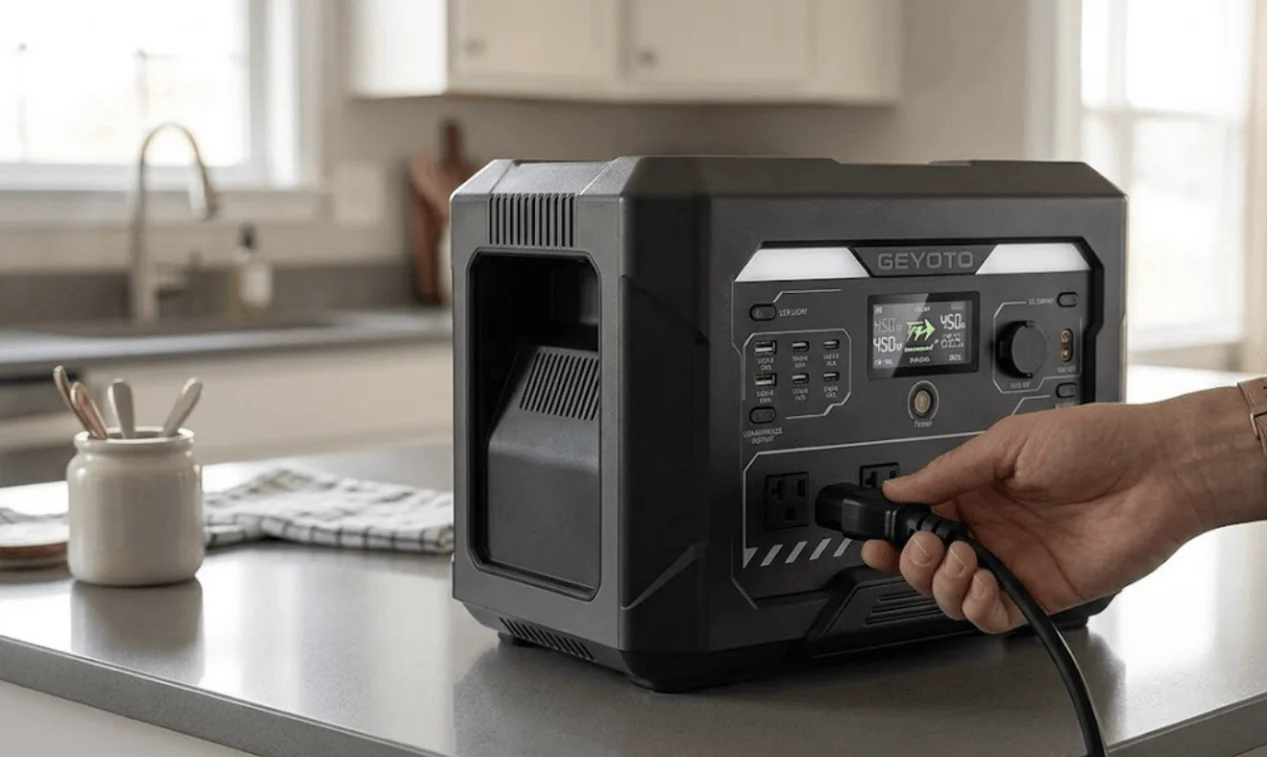
Choosing the right battery technology is an important decision when building a reliable energy storage system. Two of the most widely used lithium-ion battery chemistries are lithium iron phosphate, commonly known as LiFePO4 or LFP, and nickel manganese cobalt oxide, known as NMC. Both offer impressive energy density, charging performance, and portability, but their characteristics differ significantly.
This LiFePO4 vs NMC battery comparison examines performance, safety, lifespan, charging, temperature behavior, and practical applications. Understanding these differences can help homeowners, campers, businesses, and backup-power users select the battery chemistry that best fits their needs.
What Are LiFePO4 and NMC Batteries?
LiFePO4 batteries use lithium iron phosphate as the cathode material. This chemistry has become particularly popular for solar energy storage, portable power stations, electric vehicles, and residential backup systems because of its excellent cycle life and thermal stability.
NMC batteries use a combination of nickel, manganese, and cobalt. Their primary advantage is high energy density, allowing manufacturers to produce relatively lightweight batteries that can store substantial amounts of energy in a compact package.
Although both are lithium-ion technologies, their different chemical compositions influence how they perform under various operating conditions.
Energy Density and Overall Performance
One of the biggest advantages of NMC batteries is their higher energy density. They can generally store more energy for a given battery size and weight. This makes NMC attractive for applications where minimizing weight and physical dimensions is important.
For example, portable electronics and electric vehicles can benefit from NMC’s compact design. A smaller battery can provide substantial usable energy without adding excessive weight.
LiFePO4 typically has lower energy density than NMC. However, this does not necessarily make it inferior for stationary applications. When space and weight are less important, LFP’s other advantages can outweigh its larger physical size.
In a home backup system or solar generator, users may prefer LiFePO4 because long service life and safety can be more valuable than achieving the smallest possible battery.
Safety and Thermal Stability
Safety is one of the most important considerations in any battery system. LiFePO4 is generally recognized for excellent thermal and chemical stability. Its chemistry is less prone to thermal runaway than many other lithium-ion chemistries when properly designed, manufactured, installed, and managed.
This stability makes LiFePO4 particularly attractive for residential energy storage and portable power applications. A quality battery management system remains essential, because battery safety depends on more than chemistry alone.
NMC batteries can also be safely used when manufactured and managed correctly. However, their chemistry generally requires careful thermal management and protection against overcharging, overheating, physical damage, and other abnormal conditions.
For users prioritizing safety and long-term stationary operation, LiFePO4 often has a strong advantage.
Battery Lifespan and Cycle Life
Battery lifespan is another area where LiFePO4 frequently stands out. A properly designed LFP battery can typically withstand substantially more charge-discharge cycles than many NMC batteries.
Cycle life depends on several factors, including depth of discharge, charging voltage, operating temperature, charge rate, battery quality, and storage conditions. Therefore, advertised cycle counts should always be treated as manufacturer-specific rather than universal chemistry guarantees.
NMC batteries can still deliver a long service life, particularly when operated within recommended limits. However, repeated deep cycling and high temperatures can accelerate degradation.
For solar storage, where a battery may be charged and discharged every day, the long cycle life of LiFePO4 can provide significant value over the system’s lifetime.
Charging Speed and Efficiency
Both LiFePO4 and NMC batteries can support relatively fast charging when paired with appropriate chargers and battery management systems. Actual charging speed depends on the battery’s design, cell configuration, temperature, charger, and manufacturer specifications.
NMC can offer excellent power and charging performance, making it useful for applications where weight and rapid energy delivery are important.
LiFePO4 also supports fast charging, although users should never assume that every LFP battery is designed for the same charging rate. The manufacturer’s recommended current and charging profile should always be followed.
Anyone researching portable power systems may also encounter a fast-charging solar generator review that highlights charging time as a key selling point. However, fast charging should be evaluated alongside battery capacity, solar input limits, inverter performance, thermal management, and expected cycle life rather than considered independently.
Temperature Performance
Temperature has a major impact on lithium-ion battery performance and longevity. Both LiFePO4 and NMC batteries can experience reduced performance in cold conditions and accelerated degradation at excessive temperatures.
LiFePO4 has strong thermal stability, which is one reason it is widely selected for stationary storage. However, charging an LFP battery below its manufacturer’s permitted temperature range can cause serious cell damage. Many modern systems include low-temperature charging protection or battery heating.
NMC batteries may also require sophisticated thermal management, especially in high-power applications. Electric vehicles, for example, often use cooling systems to maintain battery temperatures within an appropriate range.
The important lesson is that neither chemistry should be treated as completely temperature-proof. Proper operating conditions remain essential.
Cost and Long-Term Value
Initial purchase price can vary significantly depending on battery capacity, brand, construction, electronics, and application. NMC batteries may offer a favorable cost-to-weight ratio because of their high energy density.
LiFePO4 systems can sometimes cost more initially, but their extended cycle life can make them economical over a longer period. If a battery is expected to undergo frequent daily cycling for many years, replacement frequency becomes an important part of the total cost of ownership.
For occasional emergency backup, the difference may be less significant. For daily solar energy storage, however, durability can have a much larger financial impact.
Which Battery Is Better for Solar Generators?
Solar generators and portable power stations increasingly use LiFePO4 because of its combination of safety, durability, and cycle life. Users who rely on a power station for emergency backup, camping, travel, or regular solar storage can benefit from a battery designed for frequent cycling.
NMC remains useful when portability and high energy density are the top priorities. A lightweight system can be easier to transport, particularly for outdoor activities where every kilogram matters.
When comparing solar generators, look beyond battery chemistry. Consider usable watt-hours, continuous inverter output, surge capacity, solar charging input, AC charging speed, expansion capability, warranty, battery management, and manufacturer support.
LiFePO4 vs NMC: Which One Should You Choose?
There is no universal winner because the ideal chemistry depends on the application.
LiFePO4 is generally the stronger choice for users who prioritize long cycle life, thermal stability, frequent cycling, and dependable stationary energy storage. It is especially attractive for home backup systems and solar energy storage.
NMC can be a better fit when low weight, compact dimensions, and high energy density are more important. These characteristics make it useful for portable equipment and applications where space is limited.
Final Considerations
This LiFePO4 vs NMC battery comparison shows that both technologies have legitimate advantages. LiFePO4 emphasizes durability, safety, and long-term cycling, while NMC emphasizes energy density and compact design.
For homeowners building a backup power system, LiFePO4 is often an appealing option because the battery can provide years of repeated cycling when properly maintained. For portable applications where size and weight are critical, NMC can remain highly competitive.
Ultimately, the best battery is not determined by chemistry alone. Buyers should evaluate the complete system, including cell quality, battery management, thermal protection, charging capabilities, warranty, operating environment, and manufacturer specifications. A well-designed battery system using either chemistry can provide reliable energy storage when matched correctly to the user’s needs.